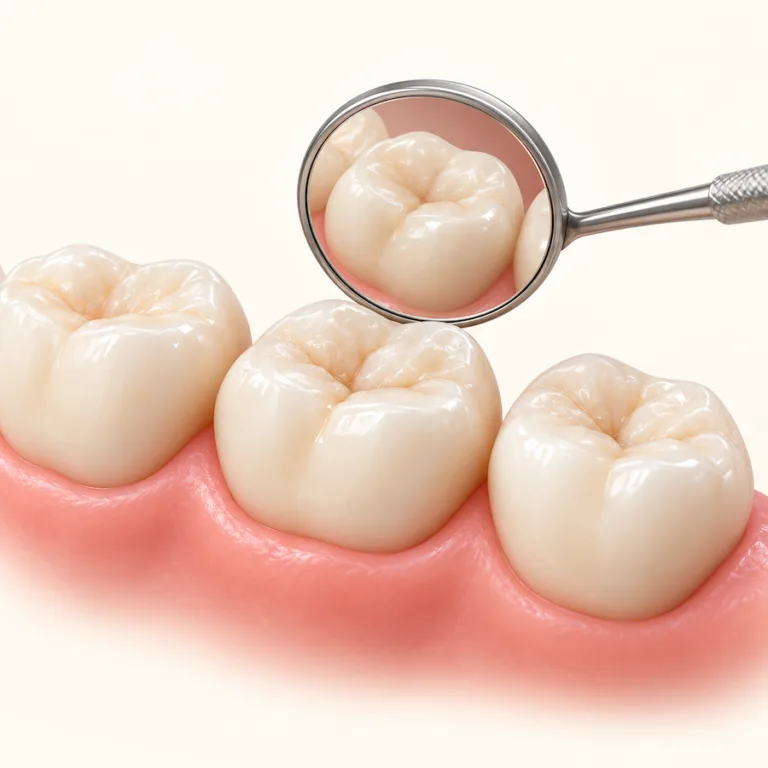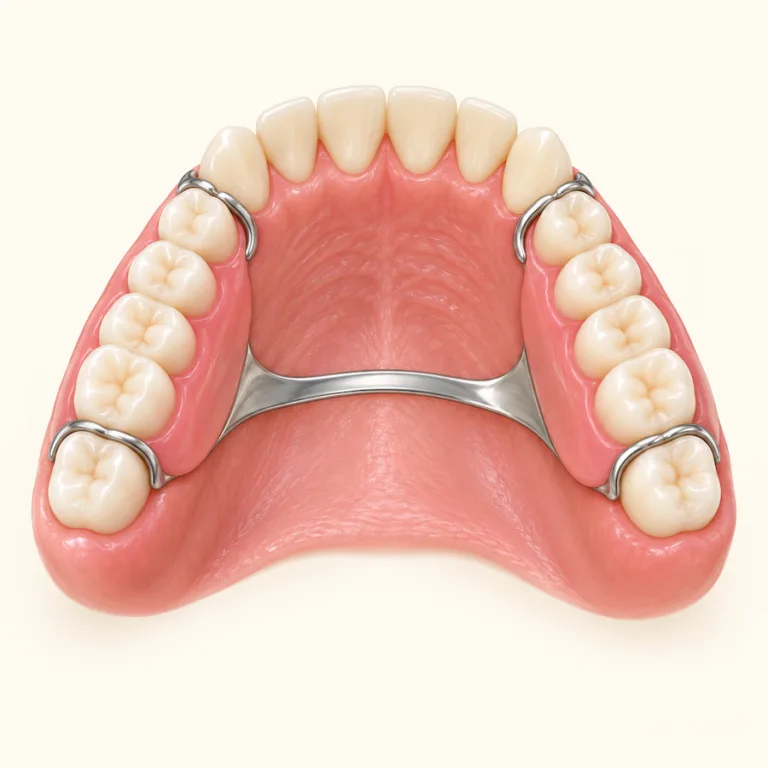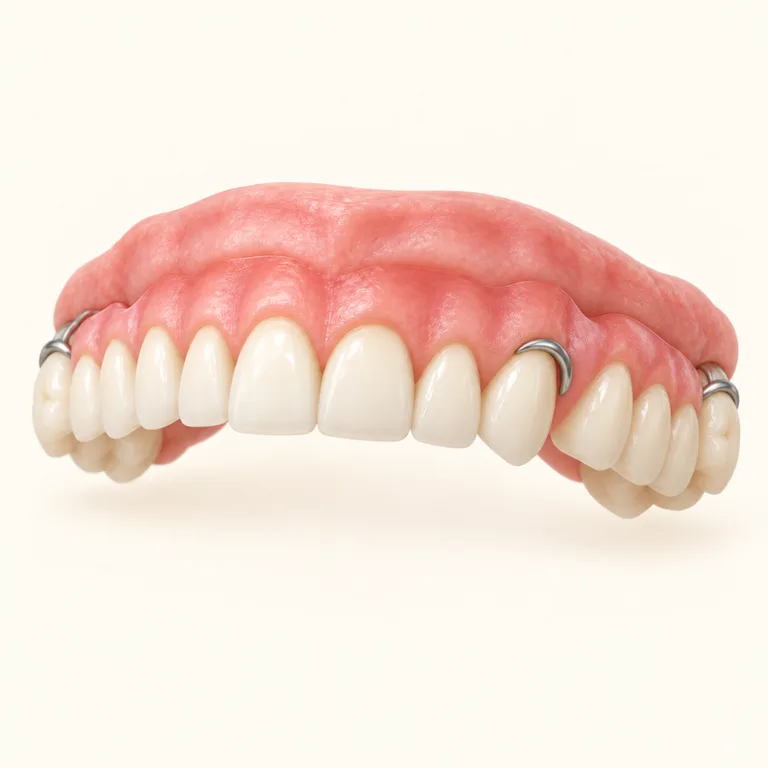
A partial denture replaces several missing teeth with a custom, removable appliance that attaches to your remaining natural teeth. It fills in gaps, helps you chew, and keeps your other teeth from shifting.
We do an exam, take X-rays, and review your options for replacing missing teeth, including implants and bridges.
2
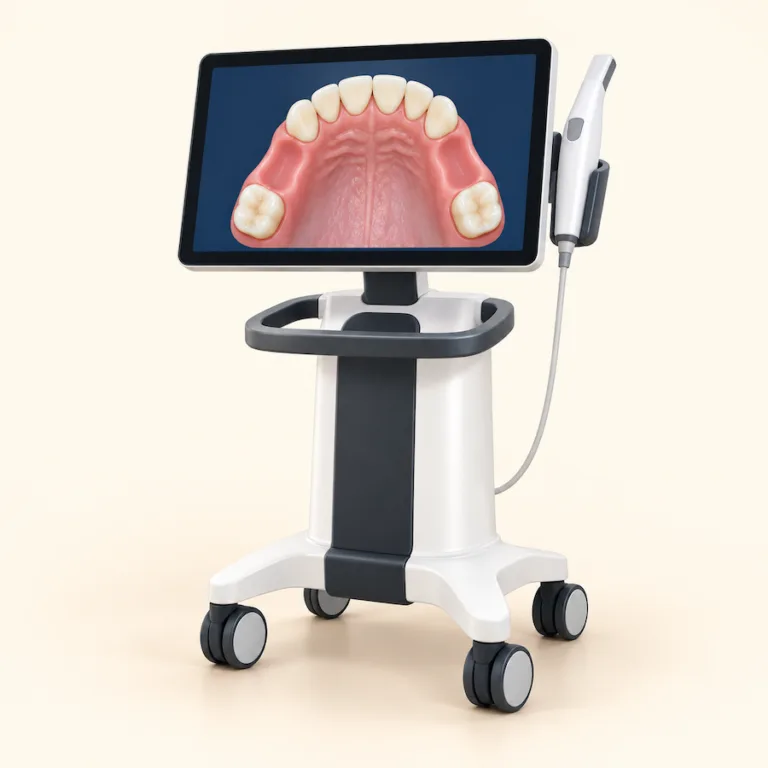
Impression or Digital Scan
We capture the shape of your teeth, and areas of missing teeth, with an impression or digital scan.
3
Try-In
A try-in lets us check the fit, bite and appearance before your partial is finished.
4
Delivery
We place your partial, check your bite, and adjust any sore spots at follow-up visits.
When Someone May Benefit From a Partial
Several missing teeth
Missing teeth on both sides of the arch
When teeth neighboring the missing teeth can’t support a bridge
When implants are not the right option
Caring for Your Partial Denture
Getting used to your partial
Your First Few Weeks
Your partial may feel bulky at first. Most people adjust within a few weeks.
Sore spots are common early on. Call us and we’ll adjust them.
Insert your partial with your fingers. Biting it into place can bend the clasps.
Keeping things clean
Daily Care
Take it out and brush it daily with a soft brush and denture cleaner or mild soap. Regular toothpaste can scratch it.
Keep it moist overnight in water or a soaking solution, and clean it over a folded towel or a sink of water in case you drop it.
Brush and floss your natural teeth carefully, especially the teeth your partial clips onto, and follow your dental team’s recommendations for checkups.
payment information
Cost & Insurance
Before treatment begins, we'll provide a written estimate showing your cost, your expected insurance benefits, and the amount you'll owe following treatment. There are never any surprises.
We accept hundreds of plans, including Delta Dental, Aetna, Principal and Aflac. Please confirm your specific plan with our office; coverage varies by employer even within the same carrier.
Partial denture, bridge or implant: which is best?
It depends on how many teeth are missing, where they are, and the health of the teeth around them. Implants are usually the closest thing to natural teeth, bridges are fixed in place, and partials are removable and often the most affordable. Your dentist will review the pros and cons for your situation.
Will the clasps show?
Sometimes a metal clasp shows on a front tooth. We design partials to keep clasps as hidden as possible, and tooth-colored options may be available.
How long does a partial last?
It depends. Often five to ten years with good care. Sometimes even longer. Your mouth changes over time, so a partial may need adjustments or a reline along the way.
What if I lose another tooth later?
In many cases, a tooth can be added to your existing partial.