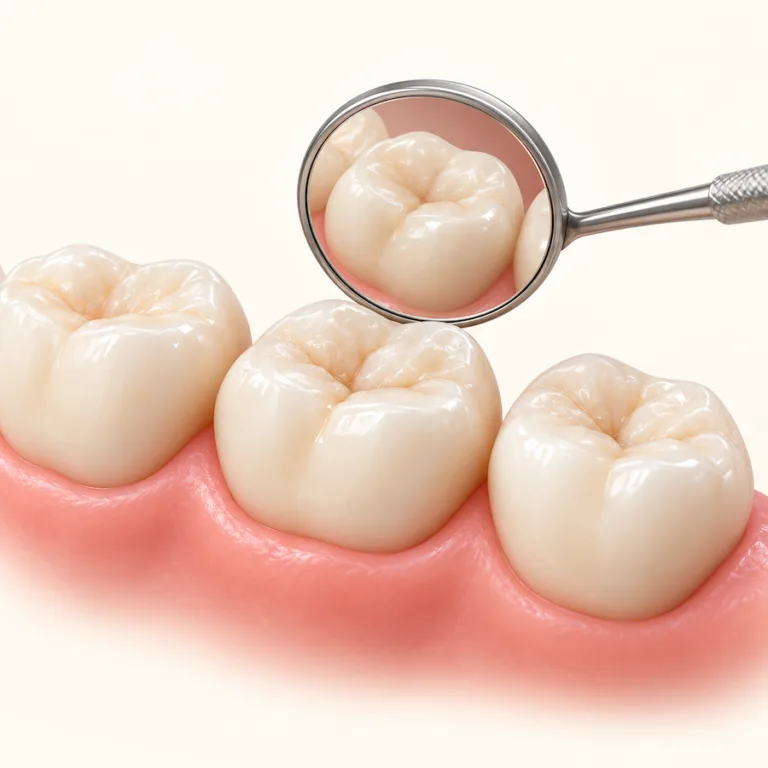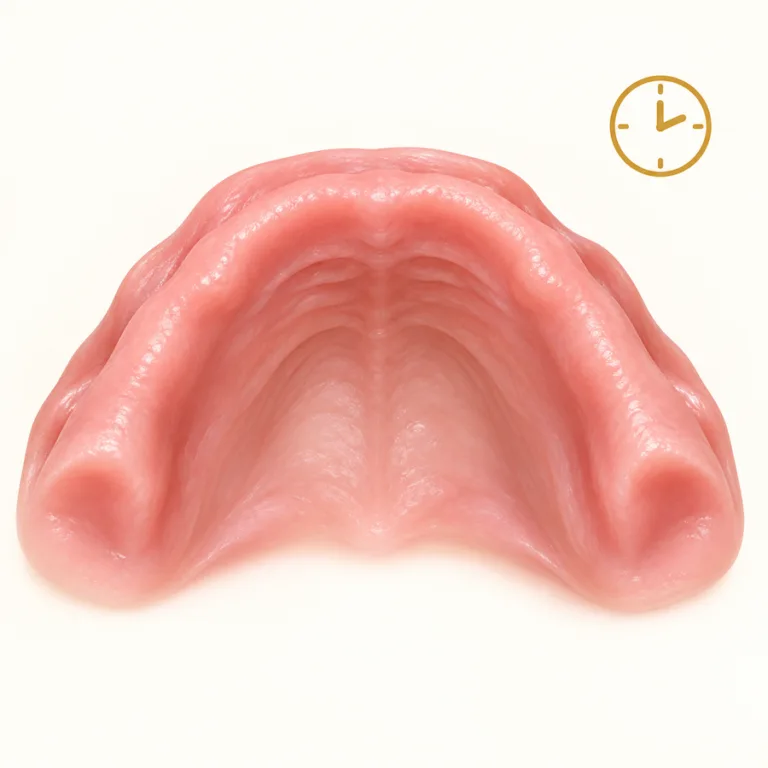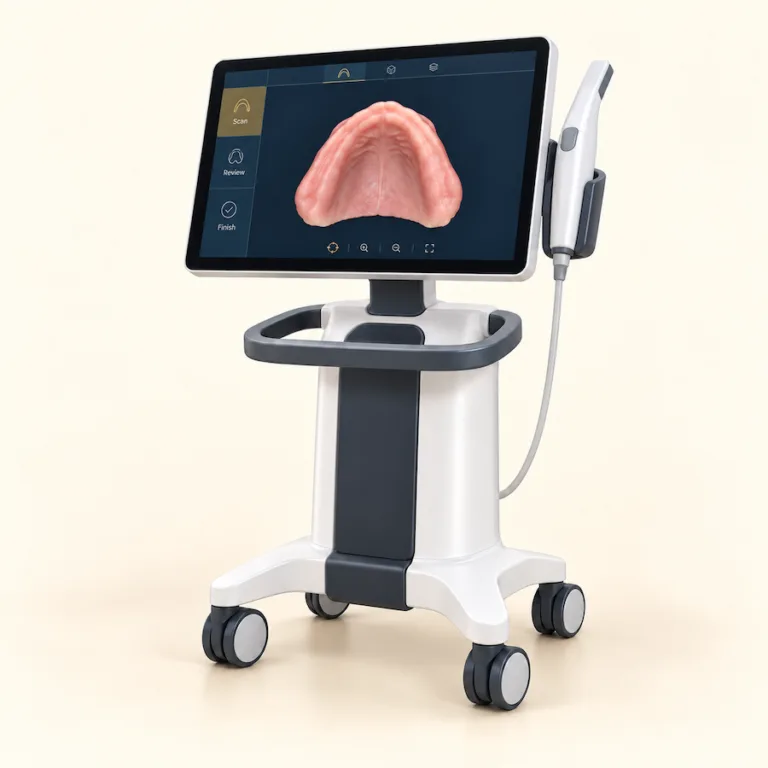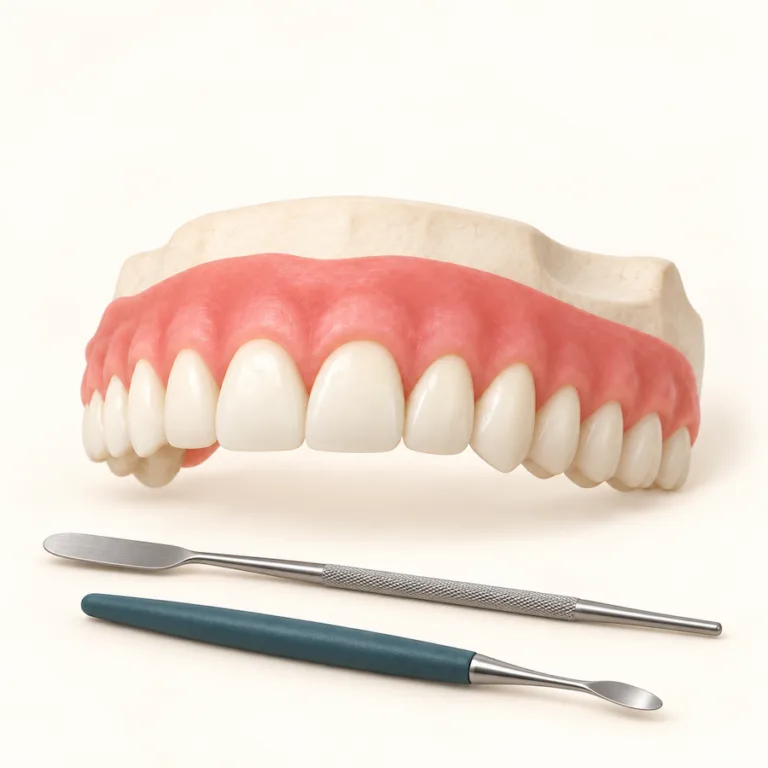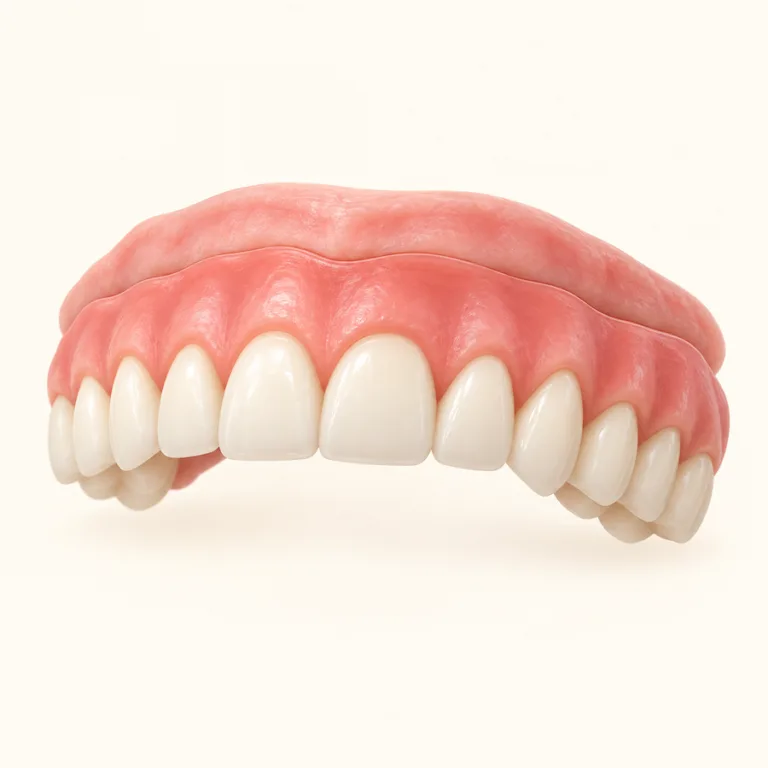
A complete denture replaces all of the teeth in your upper or lower arch. It’s custom-made to fit your gums and shaped and shaded to look natural. For a more secure fit, a denture can also snap onto dental implants.
We examine your mouth, take X-rays, and review your options, including implant-retained dentures.
2
Preparing Your Mouth
Any teeth that can’t be saved are removed, and your gums and bone are given time to heal.
3
Impressions & Bite Records
We record the shape of your gums and how your jaws come together.
4
Try-In
You’ll try a preview of your new teeth so we can adjust the fit, bite and appearance before your denture is finished.
5
Delivery & Adjustments
We place your denture, check your bite, and adjust any sore spots at follow-up visits.
When Dentures Are Recommended
All teeth are missing in an arch
When implants aren’t an option
Old or loose dentures
Remaining teeth can’t be saved
Caring for Your Dentures
Getting used to your denture
Your First Few Weeks
Sore spots and extra saliva are common at first. Call us and we’ll adjust any sore spots.
Start with soft foods cut into small pieces, and chew on both sides at the same time.
Speech may feel different for a few days. Reading out loud helps you adjust.
Keeping things clean
Daily Care
Brush your denture daily, and store it in water or a cleaning solution overnight. Avoid using toothpaste - it can scratch or dull your denture.
Remove your denture at night to give your gums a rest.
Follow your dental team’s recommendations for checkups. Your gums change over time, and dentures may need a reline to keep fitting well.
payment information
Cost & Insurance
Before treatment begins, we'll provide a written estimate showing your cost, your expected insurance benefits, and the amount you'll owe following treatment. There are never any surprises.
We accept hundreds of plans, including Delta Dental, Aetna, Principal and Aflac. Please confirm your specific plan with our office; coverage varies by employer even within the same carrier.
When implants are possible, they’re often the best long-term option. They don’t move, they help preserve your jawbone, and they feel the most like natural teeth. Dentures are a good choice when implants aren’t, and implants can often be added later to hold a denture in place.
Will I have teeth while my gums heal after extractions?
In many cases, yes. An immediate denture can be placed the day your teeth are removed, then adjusted or relined once your gums heal.
Why does my lower denture move more than my upper?
Lower dentures have less to hold onto, so they tend to move more. Snapping a lower denture onto two implants can make a big difference.
What will dentures cost?
Costs depend on the type of denture and on your insurance. Call either office for a review of your plan and an estimate.